
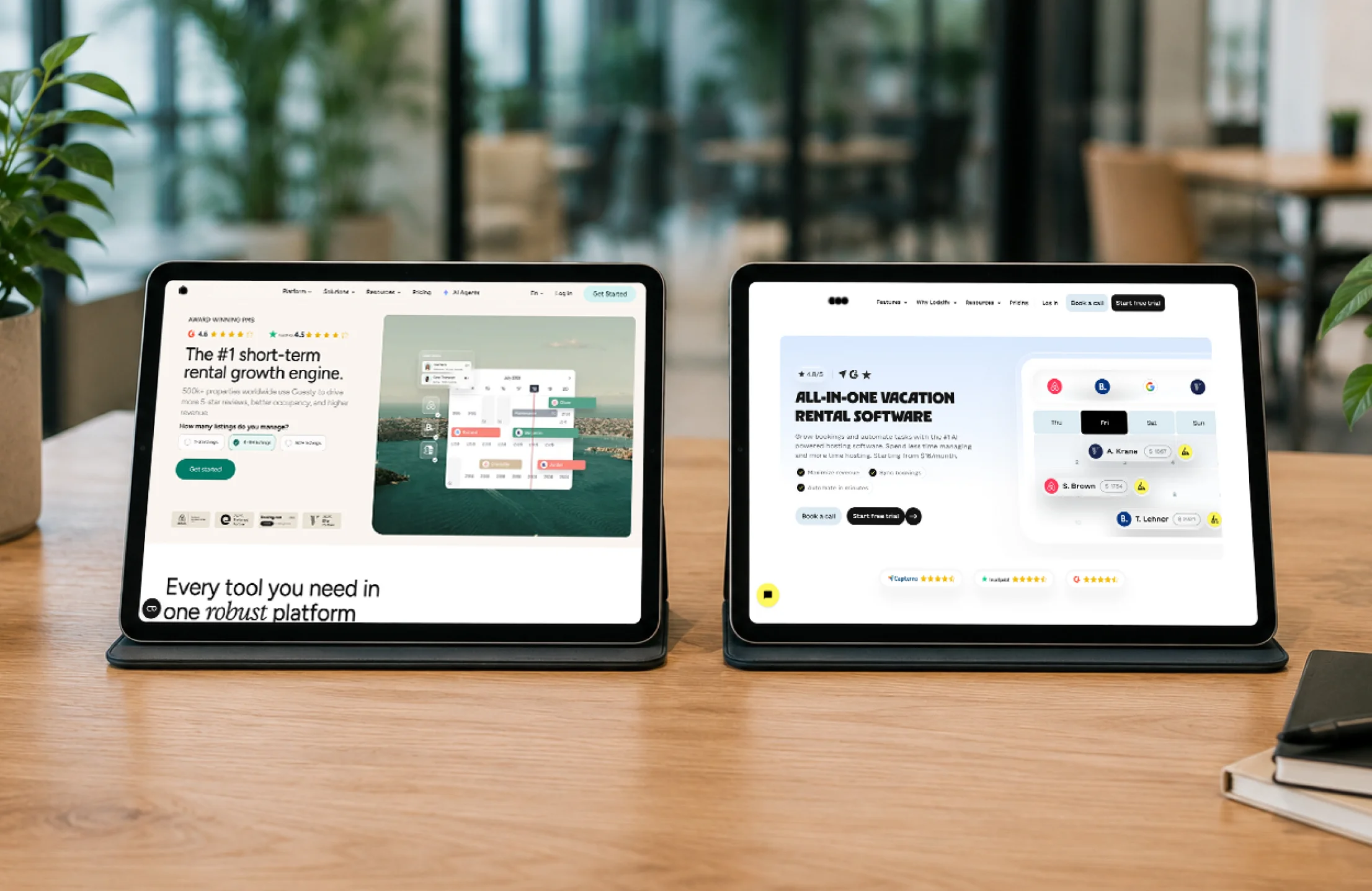
A full calendar at the end of the month isn't always a good sign. Once your portfolio grows, the challenge stops being about filling nights and starts being about managing them profitably.
Manual work breaks down fast: prices lag behind demand, owners start questioning decisions, and your team gets buried in spreadsheets. Without the right revenue management software for vacation rentals, scaling ends up costing you in ways that never show up on an invoice.
In today's short-term rental market, guessing is increasingly expensive. Property managers who run a well-connected system combining dynamic pricing, PMS, market data, and automation make better decisions and back them up more confidently in owner conversations. This guide helps you figure out what you actually need before adding another platform to your workflow.
Why Revenue Management Software Is Essential for Vacation Rental Managers
Most property managers are still making pricing decisions with less data than they should. Those who invest in the right tools adjust earlier, react faster, and walk into owner conversations with something more solid than a gut feeling.
For growing portfolios, managing prices manually stops being in control and starts creating blind spots. A Revenue Management Software for vacation rentals lets you track what RevPAR you're generating, how your ADR is trending, how much margin you're giving up for occupancy, and whether your booking pace is ahead of or behind the market. Filling calendars is fine. Doing it at the wrong price is a different problem entirely.
Best Revenue Management Tools for Vacation Rentals
Whether you're managing 20, 50, or 100 properties, you don't need more tabs open. You need revenue management software for vacation rentals that connects pricing, PMS, market data, and automation so you can make smarter decisions and defend them confidently in front of owners.
Dynamic Pricing Tools
Dynamic pricing tools adjust rates based on demand, seasonality, events, market occupancy, and booking lead time. Once you're managing more than a handful of properties, this is table stakes.
The difference shows up when you start handling exceptions. Not every property can share the same price floor, and not every season runs on the same rules. A professional pricing tool needs to let you set minimums and maximums by property, build out seasonal rules, and view performance across your full portfolio in one place.
Platforms like Airbnb and Vrbo are highly competitive. Being live on those channels with stale or static prices isn't a strategy; it's a liability. The revenue management system you choose needs to anticipate demand shifts, automate rate adjustments, and keep your team out of the weeds of manually hunting down open nights.
Property Management Software (PMS)
The PMS is the operational backbone of any professional portfolio. Everything flows through it: centralized reservations, calendars, guest communication, internal tasks, multi-channel sync, and owner reporting.
For a property management company with dozens of listings, the value is in synchronization. A PMS should keep calendars accurate, reduce availability errors, and connect cleanly with your channel manager, pricing tool, and reporting stack. If every update still requires manually cross-checking Airbnb, Vrbo, Booking.com, and a spreadsheet, the problem isn't your team; it's your system.
For growing portfolios, the challenge isn't just organizing calendars. It's retaining and winning owners with clear, credible data. Which makes the key question simple: can the PMS generate performance reports by owner without manual editing every month? If the answer is no, you already know where the friction will be.
Market Data and Insights Tools
"We lowered the price because the market was softening" is a reasonable explanation. Showing the owner that demand signals, competitive set data, and booking pace all confirm it is considerably stronger. That's where market data turns a pricing call into a defensible argument.
Knowing what revenue you generated last year isn't enough. Historical data helps you review what worked; predictive data lets you act before your competition does. You need to know how demand is moving now, what your comp set is doing, and whether your portfolio's booking pace is aligned with the broader market. That means access to benchmarks, competitive sets, and forward-looking demand signals that show whether your portfolio is keeping pace.

Automation and Operational Efficiency Tools
As portfolios grow, many managers feel they're losing control unless they review every price one by one. But control isn't about touching everything; it's about knowing what to automate and where to step in. Automation frees up time on tasks you no longer need to do manually: last-minute adjustments, orphan nights, underperformance alerts, rules by property type.
With 60 properties, a five-minute task doesn't cost five minutes. It costs five minutes multiplied by 60, plus whatever time it takes to discover someone changed something they shouldn't have. Automation turns that daily grind into something manageable. Instead of chasing every gap and every rate, your team focuses on the exceptions that actually move revenue.
How to Evaluate Revenue Management Software for Your Portfolio
Before signing up for a platform because the demo looked clean, there are five criteria worth pressure-testing.
- Integration. Your system needs to connect properly with your PMS, channel manager, and OTAs. If every adjustment still requires two manual reviews, the integration isn't solving the problem.
- Scalability. A tool might work well at 15 properties and start showing limits at 50. Check whether it supports bulk actions by market, season, property type, or owner, not just property-by-property changes.
- Owner reporting. If the software gives you real performance data, benchmarks, and pricing rationale, owner conversations get significantly easier.Being able to back up your revenue strategy with data, not intuition, is what keeps portfolios growing.
- Transparency. If a tool can't explain why it recommended a price, you'll eventually have to explain it yourself without knowing where the adjustment came from.
- Support and fit. Demand behavior, seasonal patterns, and event-driven peaks vary significantly by market. You need revenue management software that accounts for local nuance and provides responsive support when something doesn't add up.
It's also worth reviewing the most common mistakes when choosing a revenue management platform. In the demo, everything always looks clean. Reality hits when your PMS, your owners, your pricing rules, and a sudden demand spike all collide at once.
If you want to work through these criteria before committing to a platform, download A Winning Revenue Strategy and assess what your portfolio actually needs to scale with more control.
How to Build Your Revenue Management Stack as a Property Manager
With 20 to 50 properties, you need a clear foundation: multi-channel PMS, dynamic pricing with per-property controls, and monthly owner reports. As you add listings, the system needs to scale with you: portfolio-level controls, segmentation, orphan-night automation, predictive data, and performance alerts. Spreadsheets and "I'll check it later" don't scale.
The stack isn't a collection of tools. It's a chain: the PMS organizes operations, market data explains demand, dynamic pricing executes the strategy, and reporting translates all of it into something an owner understands in two minutes. When each layer runs on its own logic, your team ends up acting as the translator between systems.
That's the real cost. An owner who understands your revenue decisions argues less about Tuesday's rate and values the quarter's results more. Your tech stack isn't just another operating expense; it's what keeps scaling from meaning working twice as hard.
From Reactive Manager to Revenue Leader: The Next Step
Technology doesn't replace your judgment. It amplifies it when the system is well connected, and limits it when your tools don't talk to each other.
Start with a simple audit of your current setup: identify which pricing decisions still depend on manual review, which owner reports take more than 30 minutes to prepare, and which listings don't have clear rules for minimum price, seasonality, and last-minute availability. Those are your leaks. Across 40, 80, or 120 properties, they add up faster than you'd expect.
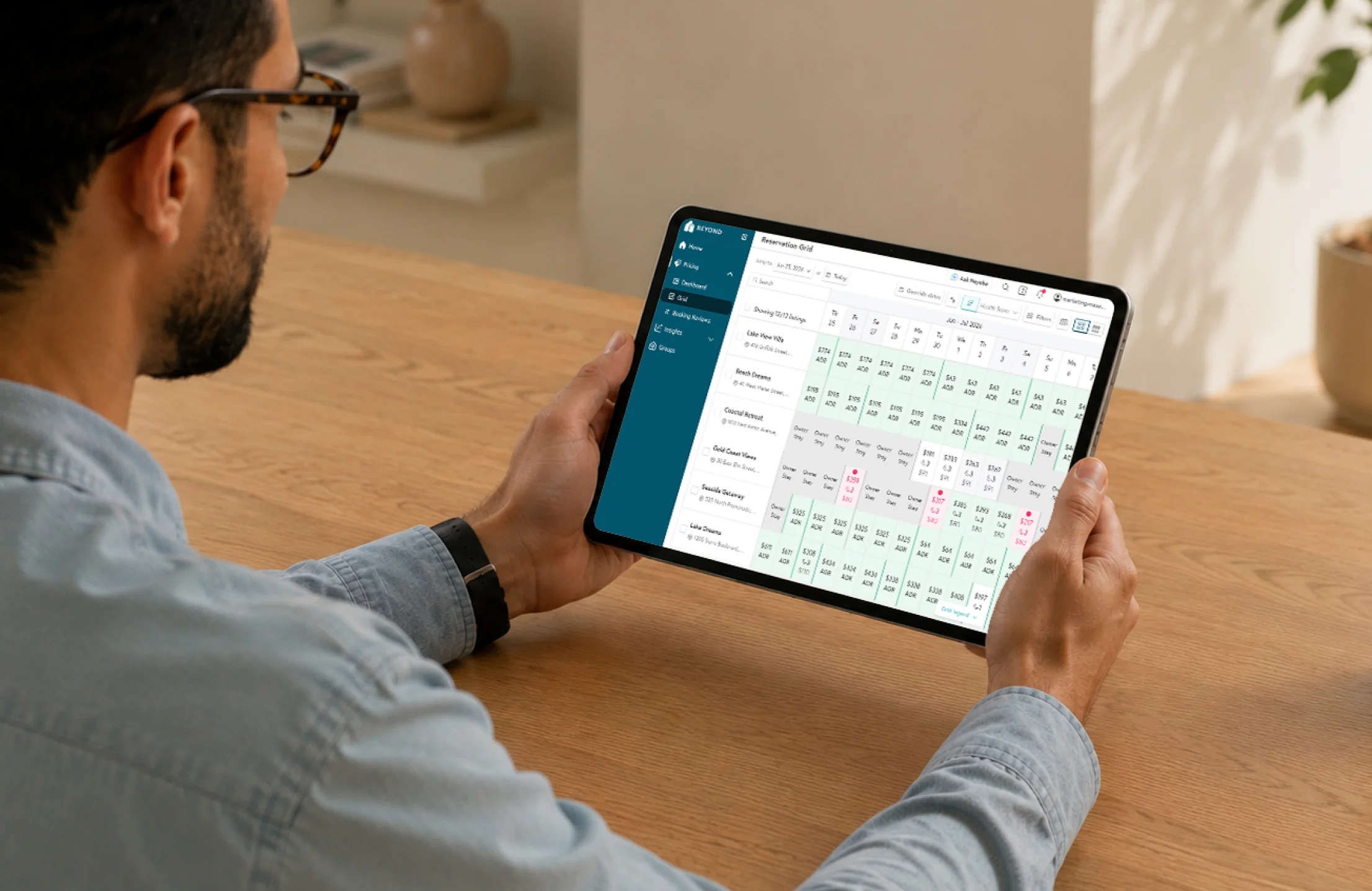
FAQ: How to Choose a Revenue Management Software for Vacation Rentals
What's the difference between revenue management and dynamic pricing in vacation rentals?
Dynamic pricing adjusts rates based on demand, seasonality, and booking pace. Revenue management is broader: it defines the full strategy to improve RevPAR, ADR, occupancy, and margin per listing.
What's the best revenue management software for managers with more than 50 properties?
The best option is one that lets you work at the portfolio level, not just property by property. Look for market-level and owner-level controls, demand data, automation, clear reporting, and solid integration with your PMS and channel manager.
Can I integrate revenue management software with my current PMS?
In most cases, yes. Before choosing a platform, check whether it has a direct integration with your PMS, how it syncs prices and availability, how frequently it updates data, and what support is available if something breaks.
How much does revenue management software for vacation rentals cost?
It depends on the number of properties, features, market, and pricing model. Rather than focusing on monthly cost alone, calculate the return: hours saved, revenue improvement, fewer manual errors, and stronger owner retention.

.webp)